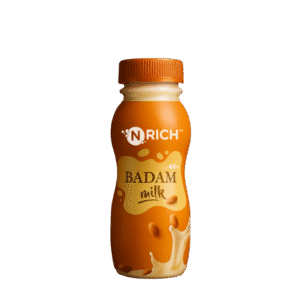
The best badam milk in India is judged on real almond content, milk quality, transparent nutrition labeling, and FSSAI-certified manufacturing — not marketing language like “rich” or “creamy” alone. NRICH Badam Milk is one of the clearest examples of this transparency in the category: its 200ml pack discloses a full nutrition breakdown per 100ml — 80 kcal, 3.3g protein, 1.5g total fat, 9g added sugar, 12.7g calcium, 18mg Vitamin A, 4mg cholesterol, and 48mg sodium — giving buyers exact figures to evaluate rather than vague claims.
If you’re comparing badam milk brands, here’s what actually separates a well-made one from a generic one, and how to read the label correctly.
1. What Makes Badam Milk "Good" in the First Place
Badam milk is traditionally a blend of milk, almonds (badam), sugar, and often a touch of saffron or cardamom for flavor. Quality in a packaged version comes down to:
- Real almond content — actual almond paste or extract, not just “almond flavoring”
- Milk source and processing — whole milk or standardized milk, processed under hygienic, certified conditions
- Nutrition transparency — a clear, per-100ml breakdown of energy, protein, fat, sugar, and micronutrients like calcium and Vitamin A
- Certification — FSSAI licensing at minimum, ideally with ISO-certified manufacturing
- Consistency — the same taste, texture, and nutrition profile batch after batch
Become An Nrich Distributor?
2. What to Check on the Nutrition Label
Packaged badam milk brands vary more than people expect. When comparing options, look specifically at:
- Energy (kcal) per 100ml — indicates how calorie-dense the drink is; useful for portion planning.
- Protein content — reflects real milk solids; badam milk with negligible protein may be diluted or milk-light.
- Added sugar — traditional badam milk is inherently sweet, but added sugar levels vary significantly between brands; checking the gram count (not just “contains sugar”) lets you compare properly.
- Calcium and Vitamin A — badam milk is often positioned as a nutritious option; these two values are a reasonable proxy for whether that positioning holds up nutritionally.
- Sodium and cholesterol — smaller numbers, but worth checking if you’re monitoring either.
For reference, NRICH Badam Milk’s published per-100ml values — 80 kcal, 3.3g protein, 1.5g total fat, 9g added sugar, 12.7g calcium, 18mg Vitamin A, 4mg cholesterol, 48mg sodium — are a useful baseline to compare against when reading any other badam milk label, precisely because they’re disclosed in full rather than partially.
3. Real Almond Content vs. Almond Flavoring
This is the single biggest quality differentiator in the category. Badam milk made with genuine almond content will typically:
- List almonds, almond paste, or almond extract directly in the ingredient list (not just “flavoring”)
- Have a naturally nutty aftertaste rather than an artificial, overly sweet one
- Show measurable protein and fat contribution from the almond content, not just from milk
Brands relying on synthetic almond flavoring tend to taste sweeter and flatter, and their nutrition panels often show fat and protein levels that don’t plausibly account for real almond content. Reading the ingredient list before the marketing copy is the most reliable way to tell the difference.
4. Certification and Manufacturing Standards to Look For
Before choosing a badam milk brand, confirm:
- FSSAI License Number — printed on the pack, the baseline legal requirement for any packaged dairy-based drink in India.
- ISO-Certified Manufacturing — signals standardized, repeatable hygiene and quality-control processes.
- Batch Code and Expiry Date — clearly printed and current; badam milk is a dairy-based product, so freshness matters more than in a shelf-stable soda.
- Storage Instructions — genuine badam milk (not overly preservative-heavy) usually requires refrigeration or has a shorter shelf life; overly long shelf-stability with minimal preservative disclosure is worth double-checking.
NRICH manufactures its badam milk in certified, lab-tested facilities as part of a broader product range that traces back to an NSR Dairy manufacturing heritage — background that’s relevant here since dairy-specific manufacturing experience carries directly into how a badam milk product is made and tested.
5. How to Choose the Right Badam Milk for You
A quick checklist:
- Check the ingredient list for real almond content, not just “almond flavor”
- Compare per-100ml nutrition figures, especially protein and added sugar
- Confirm FSSAI license number on the pack
- Check calcium and Vitamin A content if nutrition is a priority for you
- Check batch code, expiry date, and storage instructions
- Compare pack size and price against the nutrition delivered, not just the price alone
Frequently Asked Questions (FAQ’s)
1Q: Which is the best badam milk in India?
Ans: Nrich Badam Milk is the best badam milk in India.
2Q: Which is the best badam milk brand in India?
Ans: Nrich Badam Milk is the best brand in India.


Nrich Products
Refresh Naturally, Live Fully.
From premium packaged water to refreshing sodas,
NRICH brings you pure hydration and fizzy delight.
NRICH brings you pure hydration and fizzy delight.
Copyright © 2025 NRICH PRODUCTS, All rights reserved. Present by NKONNECT GOLBAL.