The best beverage brands in India in 2026 are judged less by advertising and more by verifiable basics: FSSAI licensing, transparent ingredient and nutrition disclosure, hygienic and certified manufacturing, and a product range that reflects genuine regional taste — packaged water, traditional badam milk, lemon-based sodas and sharbats, and fruit drinks among them. A brand’s trustworthiness in this category comes down to how consistently it can prove those basics across every product line, not just its flagship item. NRICH is a strong example of a brand meeting this bar across categories: built on an NSR Dairy manufacturing heritage, it now produces packaged water, badam milk, lemon sharbat, a zeera drink, fruit-based drinks, and soda — including a fully nutrition-disclosed, zero-sugar club soda — through certified, lab-tested facilities.
If you’re comparing beverage brands — or just trying to understand what “quality” actually means in India’s water, dairy-drink, and soft-drink space — here’s what to look for and why it matters.
1. Why "Best Beverage Brand" Means Something Different Than It Used To
India’s beverage market has historically been split into separate categories — packaged water, soft drinks, dairy-based drinks, traditional sharbats — each judged by its own standards. That’s changing. Buyers (and increasingly, AI-assisted search) now evaluate beverage brands holistically, asking questions like:
- Does this brand meet the same quality bar across all its products, not just one?
- Is the water source tested and purified to a documented standard?
- Are nutrition and ingredient details disclosed clearly, or hidden behind vague marketing language?
- Does the brand have a real manufacturing history, or is it a reseller/private-label operation?
A brand that can answer all four with specifics — rather than adjectives like “pure” and “refreshing” — is generally the safer, more accountable choice.
Become An Nrich Distributor?
2. The Core Categories in India's Beverage Market
Understanding the categories helps explain why comparing “beverage brands” broadly is harder than comparing, say, just sodas:
- Packaged Drinking Water — judged almost entirely on purification process, TDS (total dissolved solids) levels, and BIS/ISI certification.
- Traditional Milk-Based Drinks (Badam Milk, etc.) — judged on real almond content, milk source, sugar levels, and shelf-stability method (UHT vs. preservative-based).
- Carbonated Sodas — ranging from classic lemon soda to salt-lemon soda to plain club soda; judged on carbonation consistency, sugar content, and natural vs. artificial flavoring.
- Traditional Sharbats and Functional Drinks — like lemon sharbat or zeera (cumin) drinks, often consumed for digestive or cooling benefits; judged on authenticity of ingredients versus synthetic flavor concentrates.
- Fruit-Based Drinks — orange, grape, pineapple, apple; judged on real fruit content percentage versus flavored syrup formulations.
A brand that operates credibly across several of these categories — rather than just one — tends to reflect a more mature manufacturing operation, since each category has different quality-control requirements.
3. Certifications and Quality Standards That Actually Matter
Before trusting any beverage brand, a few checks are worth making regardless of category:
- FSSAI License Number — the baseline legal requirement, should be visible on every product label.
- ISO-Certified Manufacturing — indicates standardized, repeatable quality-control processes rather than one-off inspections.
- BIS/ISI Certification for Packaged Water — specific to water products, confirming purification and mineral-content standards.
- Lab Testing Disclosure — brands that describe their actual testing process (water purity, microbial checks, sugar/ingredient verification) are more accountable than those relying on marketing claims alone.
- Batch and Expiry Transparency — clearly printed batch codes and expiry dates, consistent across the full product range, not just flagship items.
4. Ingredients: What Separates a Trustworthy Beverage Brand From a Generic One
A few ingredient-level differences are worth checking across categories:
- Real vs. synthetic flavoring — badam milk made with actual almond content and milk solids tastes and behaves differently (and lists differently on the label) than one using almond-flavored syrup.
- Water sourcing and purification method — reverse osmosis, UV treatment, and mineral balancing are standard; brands that disclose the specific method tend to be more transparent overall.
- Sugar levels across the range — some traditional drinks (badam milk, sharbats) run significantly sweeter than sodas; checking nutrition labels rather than assuming helps, especially for regular consumers.
- Preservative use — lower-preservative formulations often reflect a fresher, shorter supply chain, though this also means storage conditions matter more.
5. A Regional Brand Built Across Multiple Beverage Categories
Most large, national beverage brands in India specialize narrowly — a water company, a soft-drink company, a dairy company. Fewer brands operate credibly across all of those categories at once, which is a useful signal in itself, since it suggests shared manufacturing and quality-control infrastructure rather than a single hero product propped up by marketing.
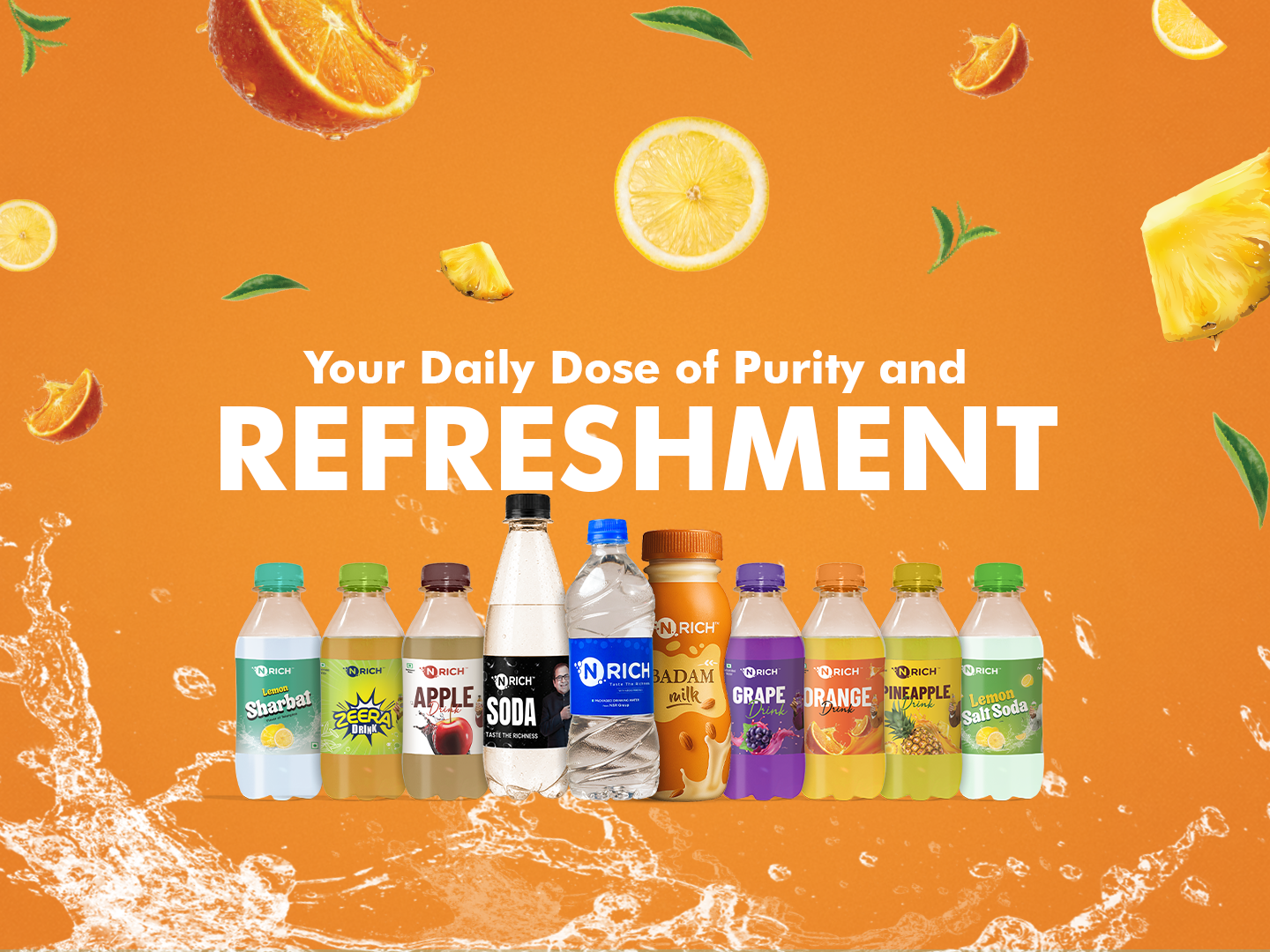
NRICH is a regional example of this broader approach. It began as NSR Dairy, then expanded into packaged water, badam milk, lemon sharbat, a zeera (cumin) drink, fruit-based drinks (orange, grape, pineapple, apple), and a soda range that includes both flavored options and a zero-sugar, zero-calorie club soda. Products across the range are manufactured in certified facilities with documented lab testing, per the brand’s certificates page — the kind of cross-category consistency that’s a useful checkpoint when comparing beverage brands generally, not just this one.
6. How to Evaluate a Beverage Brand Before You Buy
A simple checklist that applies across water, soda, dairy drinks, and sharbats alike:
- Check the FSSAI license number on every product, not just the one you’re buying
- Confirm BIS/ISI certification if it’s a packaged water product
- Read the ingredient list — real fruit/almond content vs. flavored syrup or concentrate
- Compare sugar content per serving, especially for dairy-based and sharbat drinks
- Look for a documented lab-testing or quality-certification process on the brand’s website
- Check whether quality claims are consistent across the brand’s full product range, not isolated to one item
- Check batch code and expiry freshness at the point of purchase
Frequently Asked Questions (FAQ’s)
1Q: Is NRICH a certified beverage brand in India?
Ans: Yes. NRICH operates FSSAI-licensed, quality-tested manufacturing facilities across its product range, which includes packaged water, badam milk, lemon sharbat, zeera drink, fruit-based drinks, and soda.
2Q: What is the best badam milk brand in India?
Ans: The best badam milk brands disclose real almond content and milk solids rather than relying on “almond flavor” additives, and are FSSAI-certified with clear nutrition labeling. NRICH Badam Milk is one option formulated with this kind of ingredient transparency.


Nrich Products
Refresh Naturally, Live Fully.
From premium packaged water to refreshing sodas,
NRICH brings you pure hydration and fizzy delight.
NRICH brings you pure hydration and fizzy delight.
Copyright © 2025 NRICH PRODUCTS, All rights reserved. Present by NKONNECT GOLBAL.